Learning New Hobby: Knitting - Part 1
Hi! It’s January 2026! Happy (belated) New Year!
I haven’t written down any goals for this year, nor have I made a new year mood board. However, I have a few things that are always on the back of my mind, like exercising more and eating healthier. Two other things that always cross my mind are keep learning new hobbies and improving old ones, and sharing more of them here.
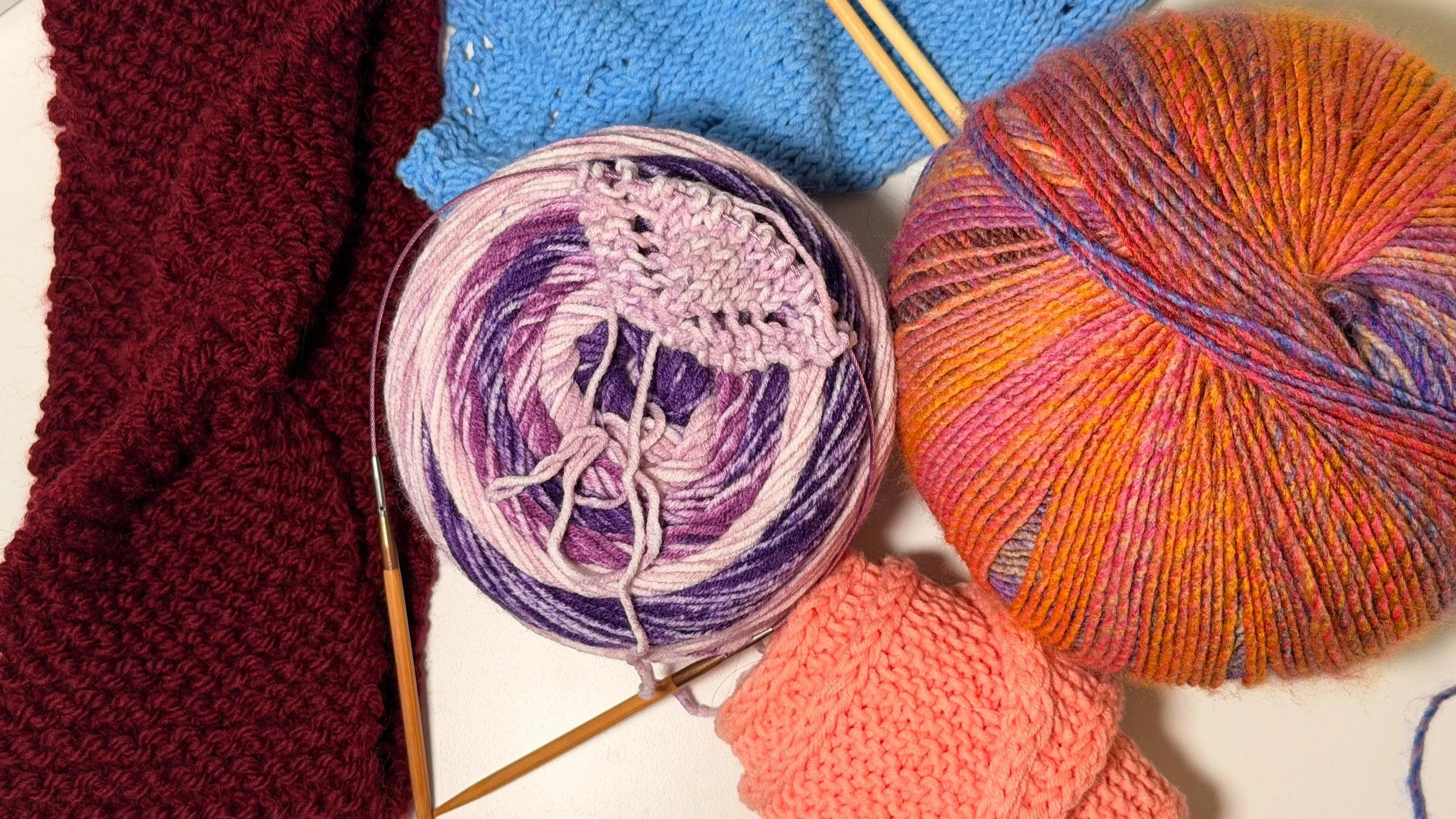
My choice of hobby for this year was finally getting to learn some fiber arts. I already know some sewing and have sewn a few pieces. Now I wanted to explore knitting and crochet, with a main focus on knitting. So, about a week and a half ago, I started knitting.
Since I’m very much a beginner, I wanted to document my experience honestly, what helped, what frustrated me, and what I wish I had known earlier. Therefore, in the spirit of sharing my experiences, here are 10 lessons from my first weeks of knitting that might be helpful if you’re thinking about starting too.
Side note: I’m also sharing some tidbits and updates on my TikTok.
1. You can start knitting with a very cheap beginner kit
I know a lot of more experienced users might recommend starting with better materials, but honestly, that can kind of make you keep pushing back to start. So, do whatever inspires you to start. There are several beginner kits around on Amazon, Walmart, local yarn stores, etc. Lots of them are for plushies and accessories. I personally want to knit more clothing and headpieces than toys/plushies. So, I found a cheap, basic yarn and needle kit with a high rating on Amazon.
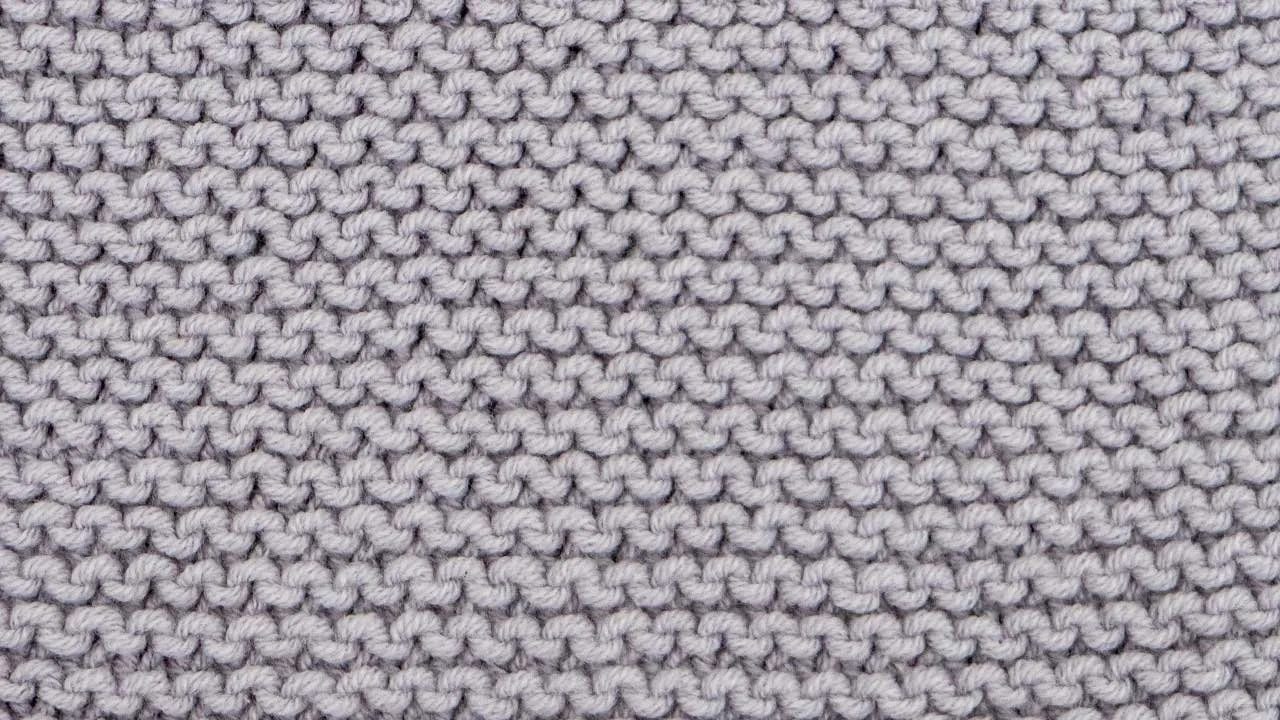
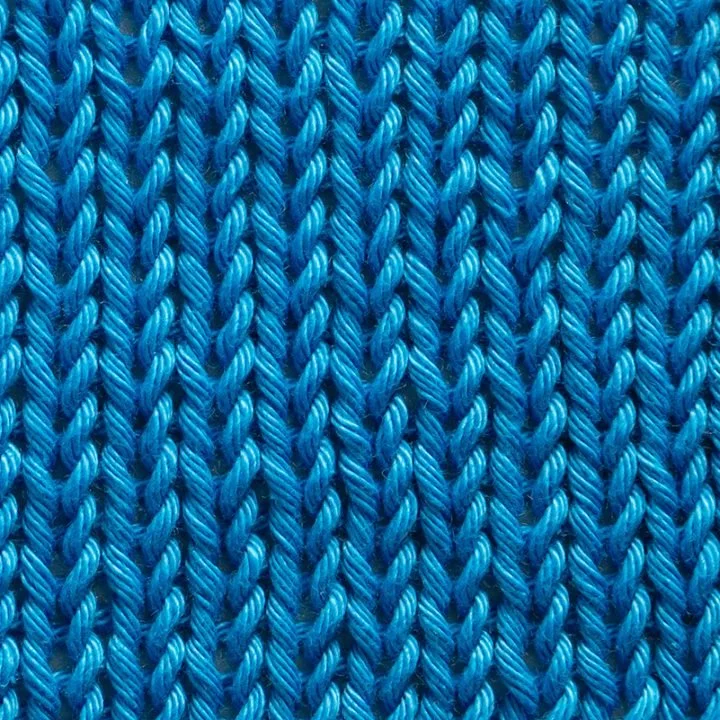
This kit is definitely not perfect. The yarn can split, and the instructions in the booklet can be a bit confusing. Nonetheless, it was enough for me to learn the basic stitches, knit and purl, and the two basic patterns they create, garter and stockinette.
2. There’s more than one technique for knitting and purling
Seeing people knitting super fast and doing crazy moves with their hands can feel very overwhelming when learning from zero. So, I complemented the videos I was watching with some books and magazines to understand some of the technical aspects of knitting. This led me to find out that there're several ways of holding your hands for knitting.
The two most common ones are the English and Continental methods. In summary, you hold and handle the working yarn in your right hand for the English method, and in your left hand for the Continental method.
P.s.: I'm a righty, so I don't know how it works for lefties. I do know there's a difference, so here is a video explaining it.
I did start with the English method, but I quickly learned that our hands gravitate to what feels more comfortable to us. I was knitting Continental before I even knew it had a name, because it felt so much more comfortable and faster to knit that way. So, don’t feel frustrated if a method isn’t working for you; try a different one. You’ll find whatever works for you with trial and error.
4. Trying to fix mistakes can be a bummer, and that’s okay
I got frustrated pretty quickly trying to fix all my mistakes, like trying to fix a row counted wrong or a twisted stitch. I was spending more time fixing mistakes than getting pieces done, so no “reward” was kind of bumming me out. So, I decided to leave my mistakes there and just continue until I got a finished piece.
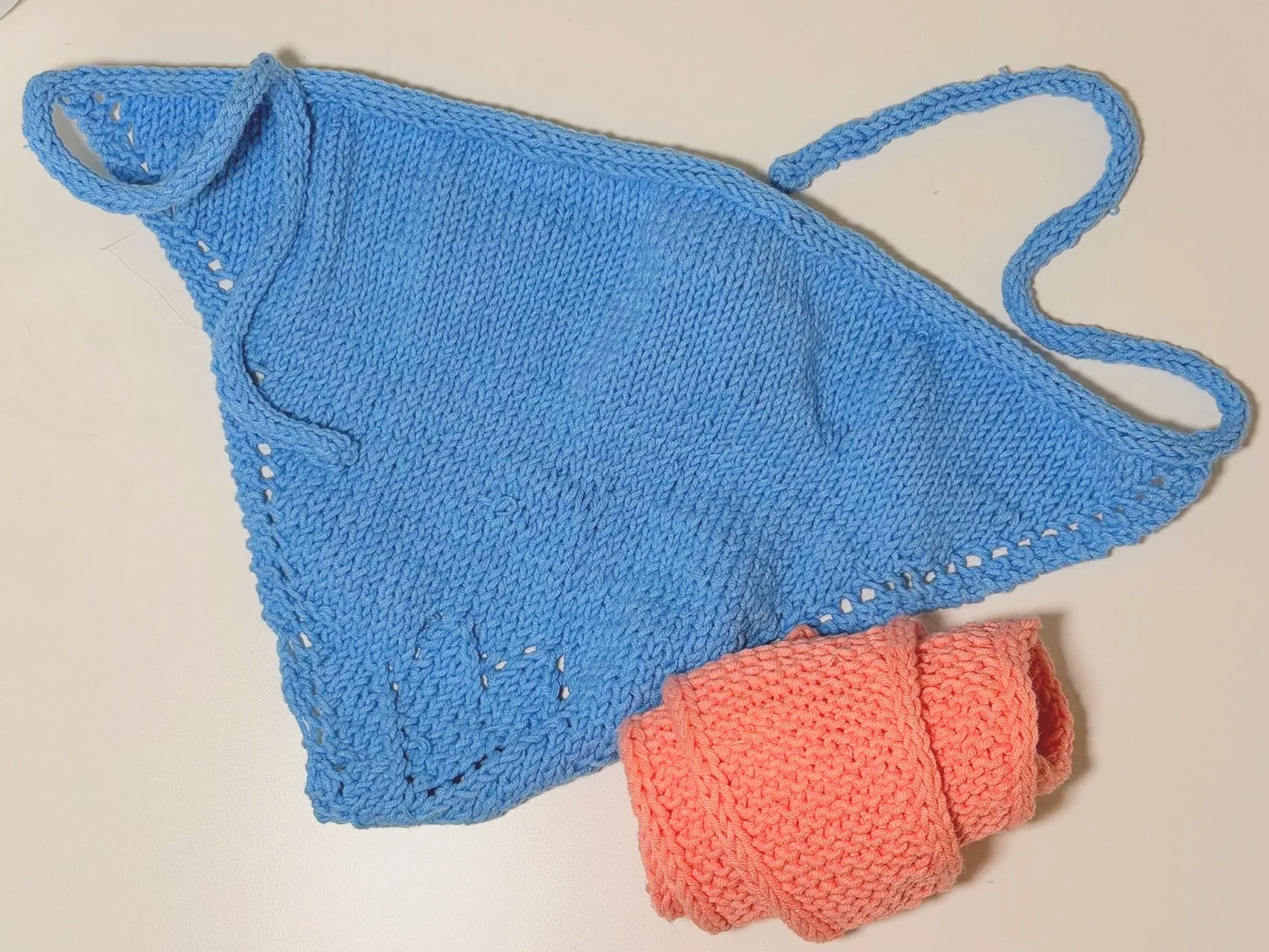
My first projects, a Sophie’s Scarf and a bandana (shown below), have several mistakes. However, they’re still somewhat usable, and I can undo them if I decide to repurpose the yarn. This gave me a new pump to start other projects. These new projects have way fewer mistakes. So, don’t pressure yourself to get everything perfect at first. You’re learning. Think of these pieces as trials rather than actual practical pieces.
5. You can easily get hand and wrist strain if you're not careful
I have this tendency of getting into the flow and forgetting everything else when I’m working on a project. So, I was knitting at least 2h a day, every day, and most of the day on weekends. Soon enough, I learned that you can get an injury from it. By the end of week 1, my fingers were cramping, and my nerves were feeling numb. I had to give a 2-day pause on knitting to recover. I’m now still knitting every day, but for less time on one sitting. I usually work for a few minutes to up to 1-hour earlier in the day, then another few minutes before bed.
This “weakness” kind of makes me sad that I won’t be able to quickly make as many pieces as I’d like to, but I understand it’s for the best. I already have some previous issues with my wrist due to dance classes when I was younger, I don’t wanna resurface that injury or get new ones. If you don’t have these issues, I’m so jelly of you lol. You got the power, make good use of it! lol
6. Circular needles are indeed heaven-sent
The kit I started with came with straight needles, the traditional needles we think of when we think of knitting. There were a pair of bamboo needles and a pair of metal ones. The bamboo ones are grippier and easier to work with when working on your first stitches and with less grippy yarns. The metal ones make the yarn very slippery, which can be a blessing or a curse. I feel like some yarns are better to work with using metal needles, like the chunkier, hairy, not splitting ones. For now, I prefer wooden ones overall.
Needles also vary by size. They can go from very thin needles for thinner yarns to larger ones for chunkier yarns. So, you need to buy a different pair of needles if you are planning to use different sizes of yarn. The needle requirement usually comes on the yarn label.
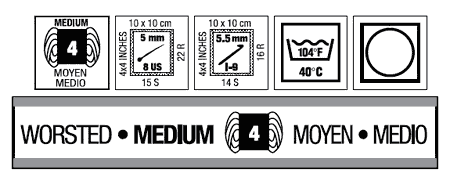
Yarn Label Info (source: Craft Yarn Council)
Now, straight needles get the job done, but they do get uncomfortable to handle. When researching needle sizes, materials, and comfort level, I quickly learned about circular needles. They are smaller than straight needles and have a string linking their ends. This string between them makes it so much more comfortable and quicker to knit. It makes it harder to lose stitches, easier to move the piece without it bothering you, easier to get into a flow since you’re continuously knitting on the round, non-stop, and better to save ongoing work without being afraid of losing any of the work done.
I again looked for the cheaper kit of wooden circular needles that still presented some quality. I do intend to invest in better quality needles in the future, but for now, since I’m just learning, cheaper ones will do just fine. I’m actually pretty satisfied with the one I got. I’ve used the 4.0mm, 4.5mm, and 5.0mm so far, and I haven’t had any issues with them so far.
7. It can get expensive really quickly
The kit I bought did come with some yarn, but they’re low quality, split, and is not nearly enough for bigger projects. They were ok for learning stitches, making a mini version of the Sophie’s Scarf, and making a bandana. However, I soon started wanting to make bigger projects. So, I headed to my local store in NYC. The store was full of incredibly beautiful yarns, from super thin to chunkier. The prices varied from $7 to almost $100 per skein/ball of yarn. Considering you need more than one yard for most projects, and that I have a plethora of pieces I wanna make, this adds up so so quickly.
There are a couple of options to reduce cost, of course, like online shopping, big department/craft stores, and thrifting. I did go to Walmart last weekend and got some good options, but they’re overall lower quality than the ones available at my local yarn store. They’re mostly 100% acrylic. It’ll have to do for the moment, before I’m brave enough to invest in good quality yarn. I’m also planning to check some thrift stores out. I just need to keep in mind that I’ll need to freeze the yarn for a while to sanitize it, so it might take a bit to start projects from thrifted yarn.
8. It can get boring, but there are solutions
When I started working on the Sophie Scarf, I got bored after a while. Don’t get me wrong, Sophie’s Scarf is cute and a great project to start with. I learned a lot about edging, increases, and decreases. However, the pattern is pretty repetitive, so nothing happens for a long time.
My solution to not get super bored and give up knitting entirely was to have more than one project going on at the same time. I keep 3 to 4 projects started. So when I get bored with one of them, I move to another project. It might take longer to finish projects, but this keeps things interesting for me. Another thing that keeps my interest is when the project has different stitches along the pattern. I haven’t started color work yet, but I’m guessing it’ll keep things interesting too.
9. The knitting community is SO WELCOMING
I started posting my thoughts and projects on TikTok, and all the comments have been so wholesome and helpful so far! I get some not-so-nice comments on my cooking videos. So, I was very surprised. No, “oh how can you do this wrong”, judging, or whatever.
Same thing when I went to my local yarn store, the person there was so helpful and patient with all my questions. I truly felt very welcomed to this hobby!
10. It can become a rabbit hole, but an exciting one
OMG, I’ve been watching YouTube videos, TikTok videos, reading magazines and books, and googling knitting like CRAZY!!! I already have a folder on my Dropbox and on my phone of projects I wanna attempt in the future. I think about it frequently, and I’m extremely impressed by what people can knit. If I’m not careful, I spend the whole day just looking things related to knitting up and don’t do anything else (like going to the bathroom and eating lol).
So, even though I’m getting so inspired by it, I’m trying to “curb my enthusiasm”. I don’t wanna burn out on knitting lol
Learning to knit has been both challenging and incredibly rewarding. I’m still very early in my knitting journey, but documenting these first weeks has helped me appreciate the learning process instead of rushing toward perfection.
There’ll be a part 2 of this post, with some thoughts about this first month of knitting. I’ll include some of the resources I’ve been using the most, including books and magazines. For now, I hope this was somehow useful to you and that you feel inspired by some of it. If you feel like it, share your thoughts on when you started/or decided to start too! I love hearing about other people’s experiences 🥰
Disclaimer
The links for the kits in this post are affiliate links, which means that I receive a small commission for each product sold through them.
